Relatively late wake-up this morning (6:15 am) because we are going to be out all day driving and then get on a boat to a remote island up the delta. Continental breakfast at camp, to-go coffees, and we are off. The main goal is to drive is to go locate on of the Barclay and Stenner secret swim spots in the Okavango. We take some main roads back up north passing like 3 self-drivers in 10 minutes, the first non-Barclay and Stenner people in three days.
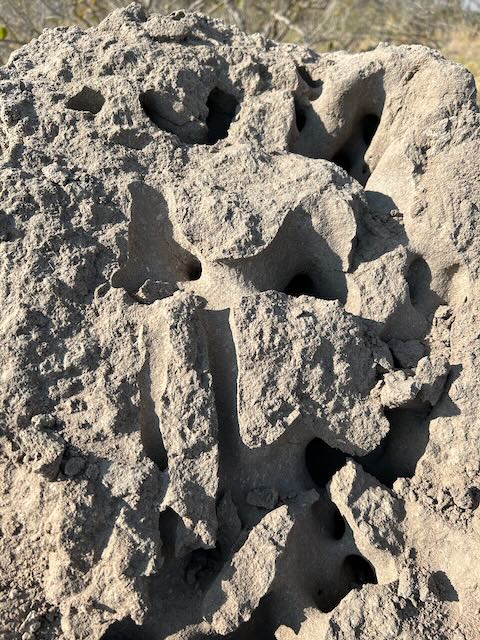
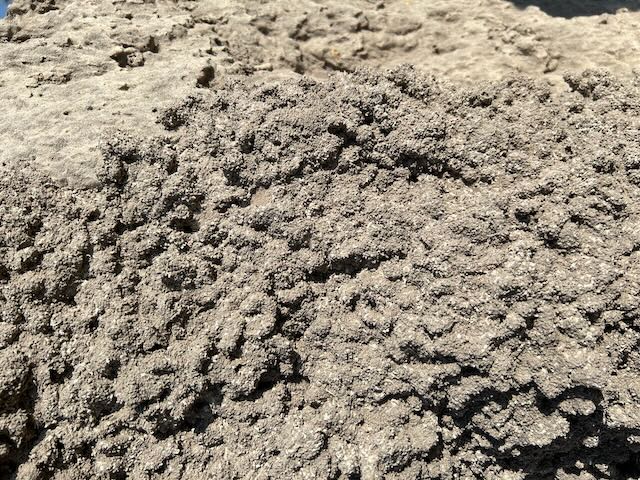
Along the way we get a deep dive into the termite ecology of the delta. Each mound that you see at the surface is the “cooling tower” tip of a huge termite iceberg. Each has one queen who produces some 30k eggs per day to generate an unfathomable army of termites, with different roles to create the mound and ultimately make sure the queen stays at the correct temperature to keep reproducing. These termites collect little grass bits that they take back into the mound, but they can’t eat it directly. There is a fungus that they cultivate inside the colony that digests the grass and turns it into simple sugars that the termites can eat. The mound that sticks out of the ground is made of sand that they mix with their saliva to form a concrete like shell. The mound itself is effectively a heat sink to dissipate surplus heat from the colony, partially because the queen requires a very narrow temperature range to reproduce successfully. When the rains come, the outer shell of the mounds will soften. Flying termites will hatch and fill the sky for one day as millions of them are attempting to mate and establish a new colony or reestablish a collapsed one (where the queen has died, perhaps of old age, up to 18 years!). Once a year the fungus inside the mound produces giant white mushrooms overnight. They are apparently quite the delicacy but they don’t last long as the moment they sprout all the grazing animals in the delta descent upon and eat them as one the more nutrient rich options in the otherwise quite nutrient poor sand. If you weighed all the termites against all the mammals in the delta, termites would win 2 to 1🤯.
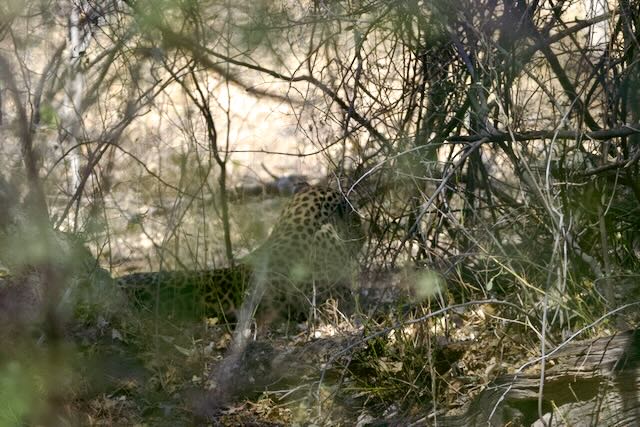
James’ co-owner John is out with his family taking a quick vacation between safari guiding. He is in the area and locates a leopard deep in the bush with a fresh warthog kill. He radios us and we race over at full speed to see it. Not the best photos but keeping our streak of seeing these rare and majestic animals alive. We also spot a reed buck which is another kind of antelope that we haven’t seen before that only lives out in the deep reeds far away from the main guide roads.
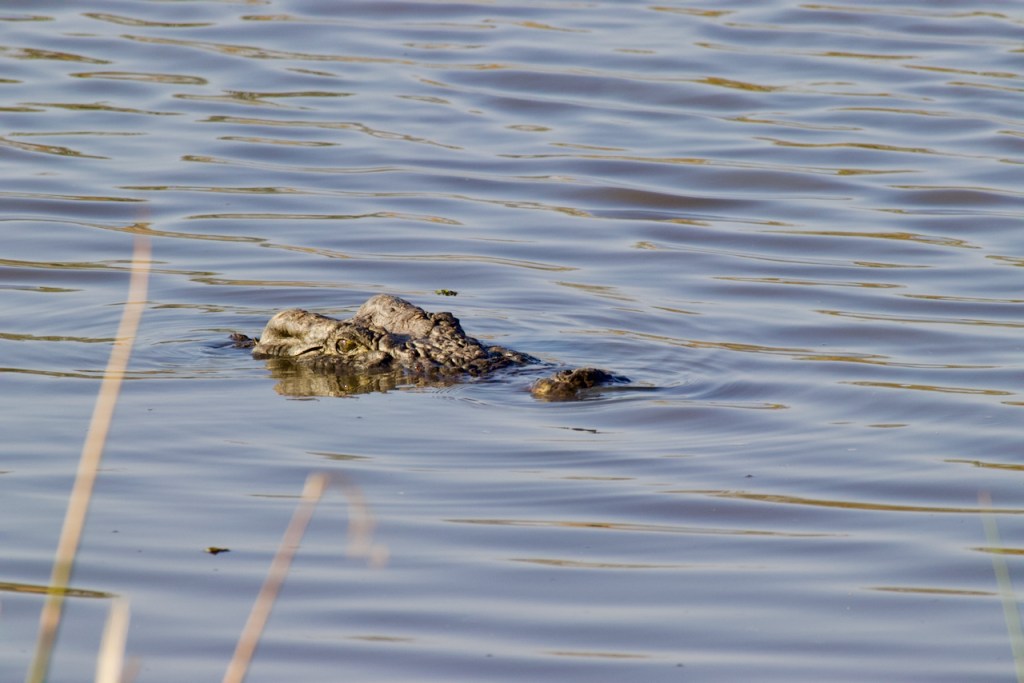
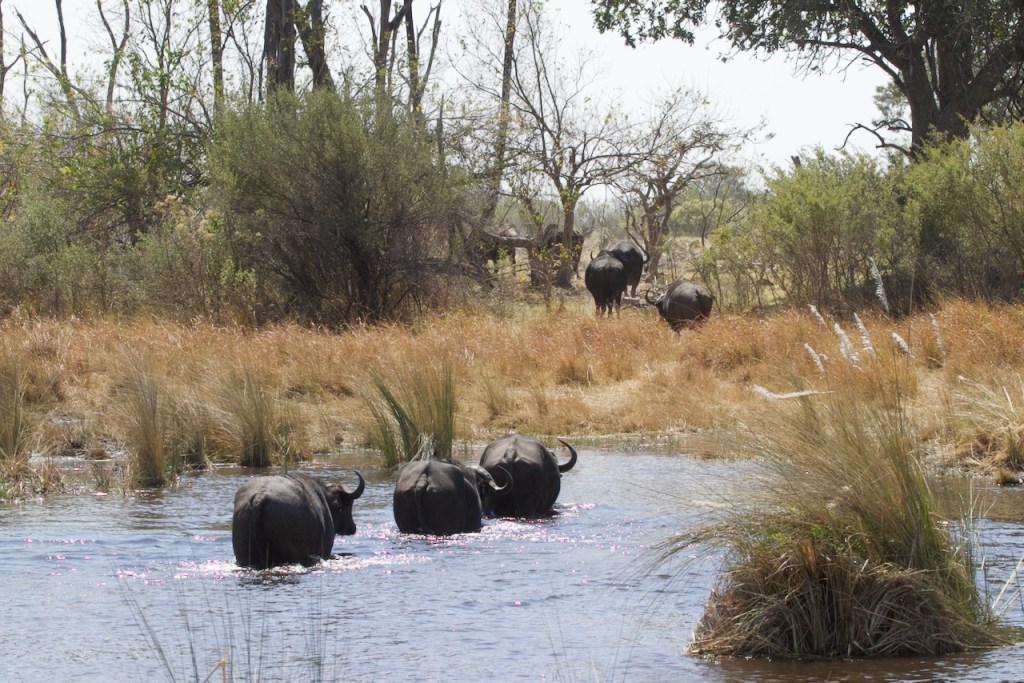
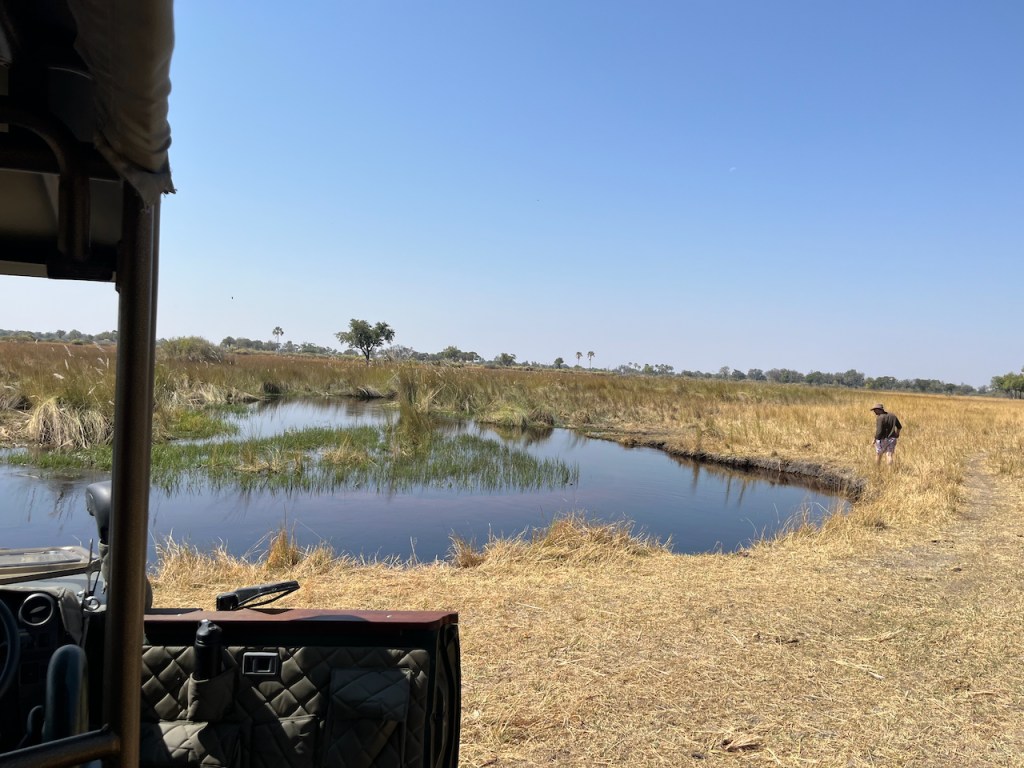
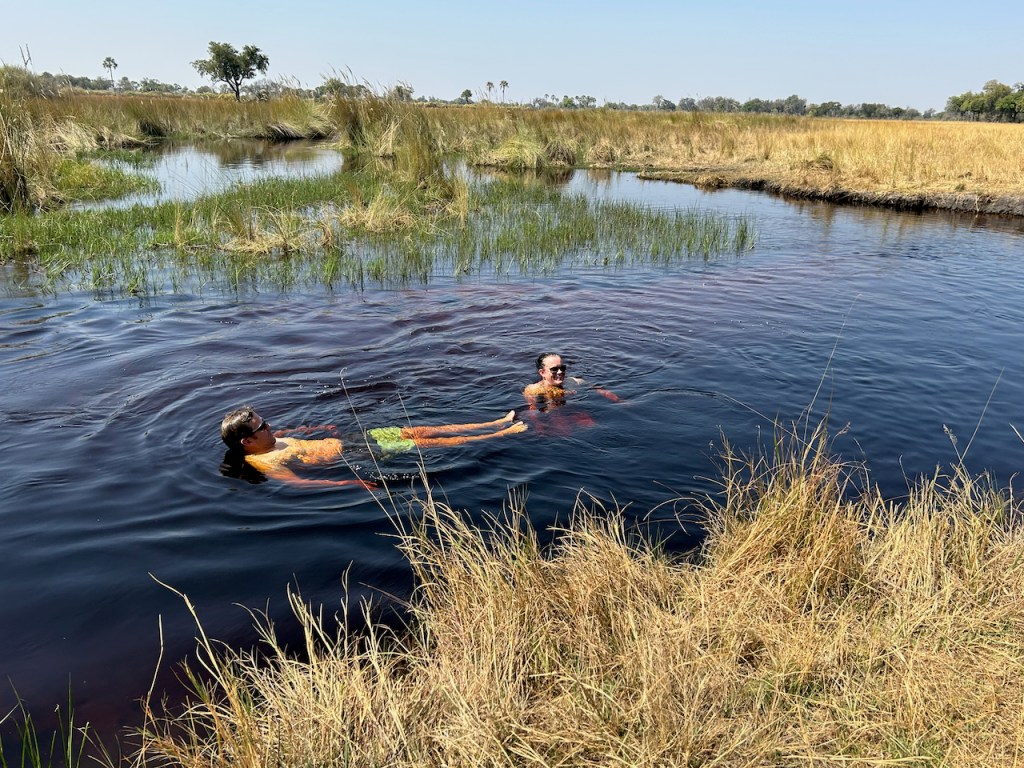
With the unexpected leopard trip, we are starting to fall behind schedule, which is a bit of an issue because we need to get to the island before dark, navigating waterways filled with crocodiles and hippos in the dark is a no-no. We race over the swim spot, don our swimsuits, then James goes to check the water to make sure it doesn’t have crocs and oh-no, the water is murky instead of clear. Something is stirring up the silt and not being able to see into the water is not ok. No problem, we’ll drive up stream. The next swim spot we find the problem. A big herd of 200+ buffalo are in the process of crossing the channel. Great sight and this is Tom and Angela’s first big herd. But this spot is out as well. Another 5 minutes up stream and we get to backup swim spot number 3. James checks the water, it is a bit dark, getting stained with all the tannins in the reeds, but clear enough to confirm there aren’t any crocs. We all wade in, dunk our heads, and spend some time bobbing around in the refreshing and, if properly checked, totally safe Okavango delta water. Pretty unique experience that isn’t on your standard tour and none of us had that on our bingo card.
Now we are seriously behind schedule so James floors it and gives us the most aggressive Ferrari safari of our trip. Fortunately the enhanced suspension helps quite a bit but we are all pretty ready to be done by the time we roll up to the boat launch, right on time.
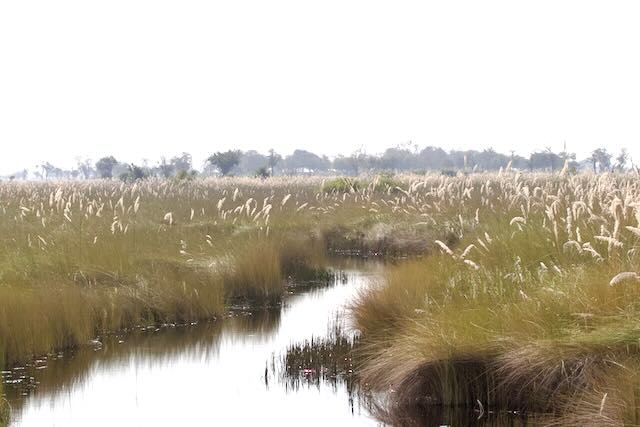
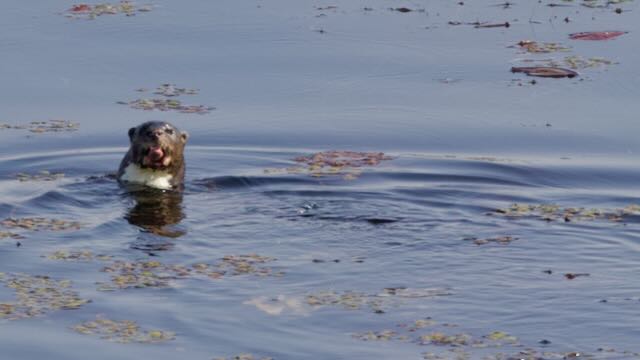
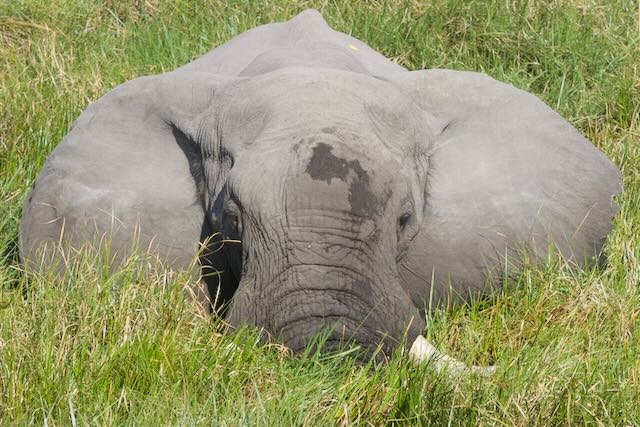
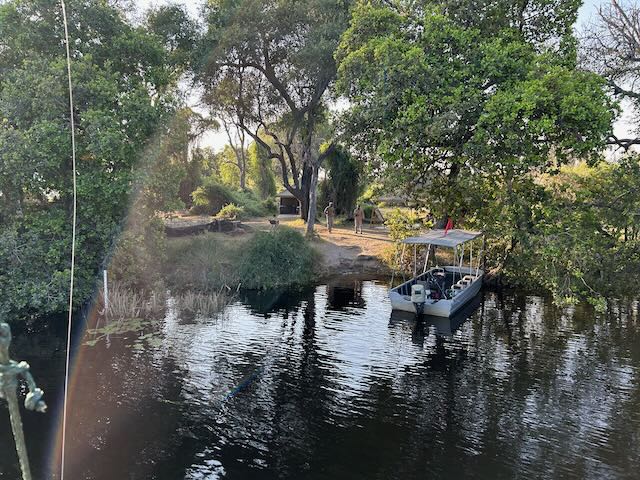
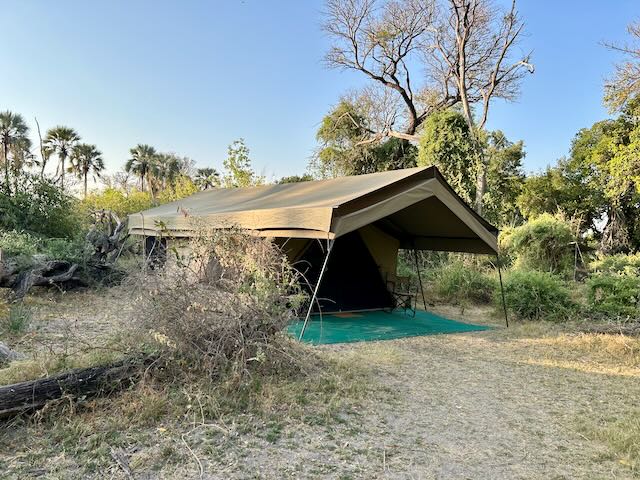
Now it is time to relax, we have our late lunch (it is 2:30 pm) and start a slow peaceful motor on the flat bottomed double decker river boat up the Okavango channel. Not long in we spot some elusive river otter, which James gets quite excited about (always a sign of something truly rare if your guide gets their camera out). Good sight but quite the ugly bugger. Birds, elephants, sweeping vistas of reeds and papyrus from the upper deck. It takes a little more than 2 hours to arrive at the island. Like our previous camp, it is managed by the Moremi game reserve and is bookable site that they reserve two years ahead and can’t keep assembled for more than 6 consecutive nights. Our itinerary indicated we’d have “domed tents with a shared camp bathroom” but this is not the case. We each have a large tent with private ensuite with a chemical toilet and gravity shower. There is a mess tent, a lounging tent, and the bar by the fire. It far exceeds all our expectations. We are instantly bummed we only get to spend overnight here.
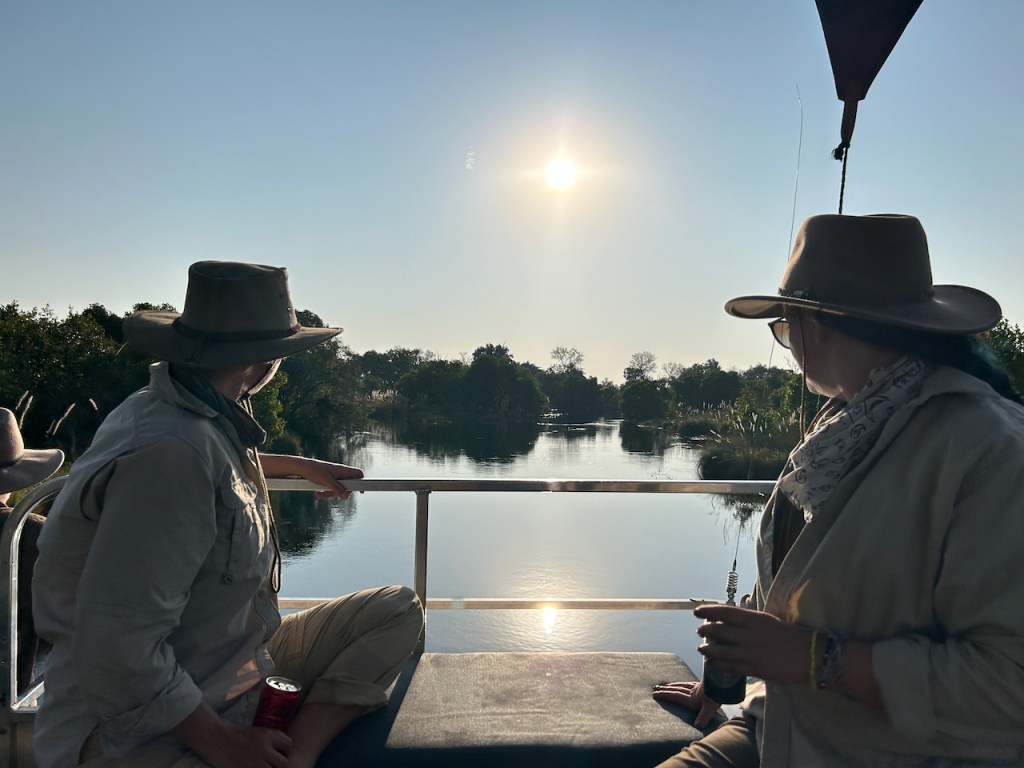

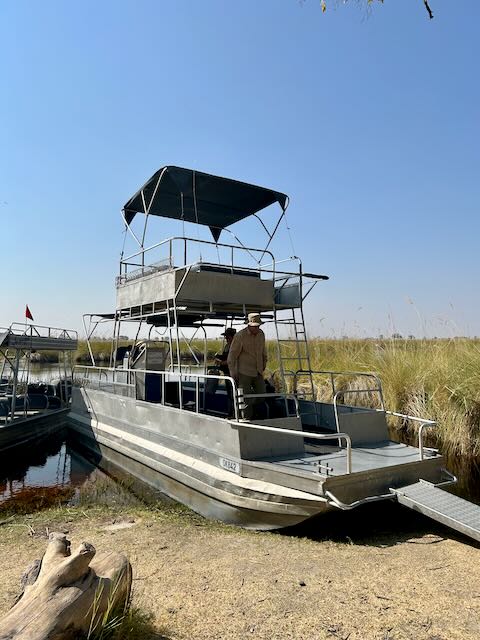
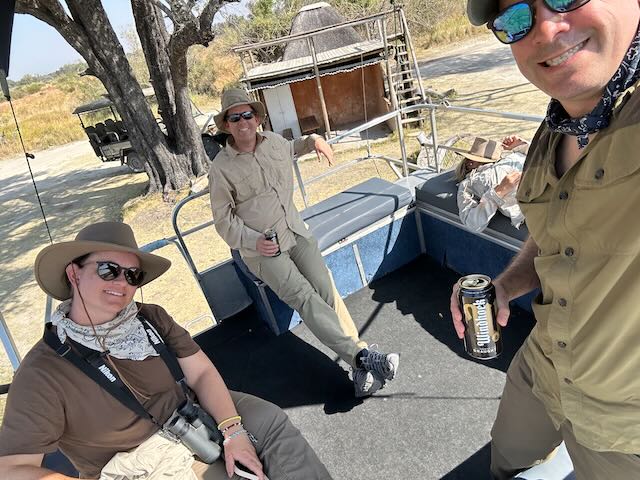
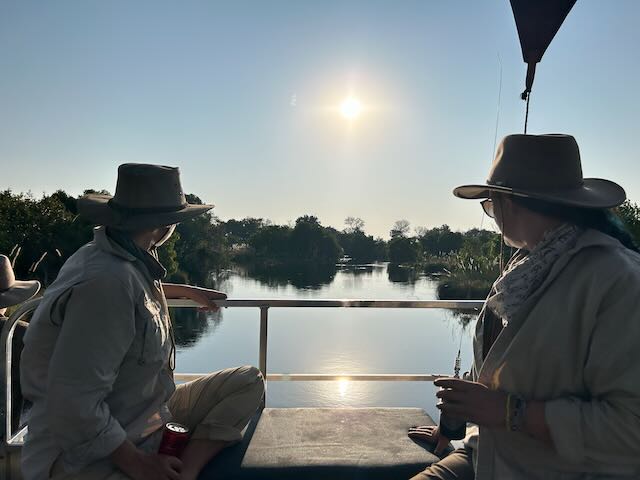
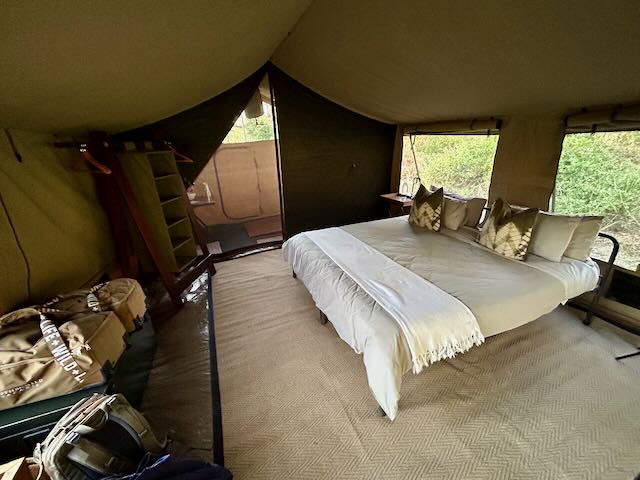

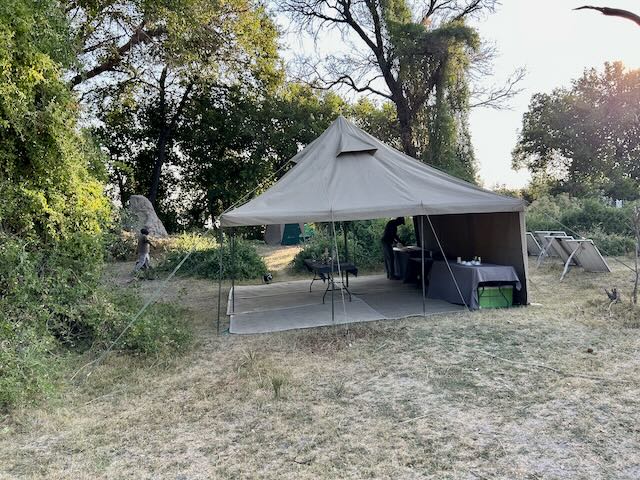

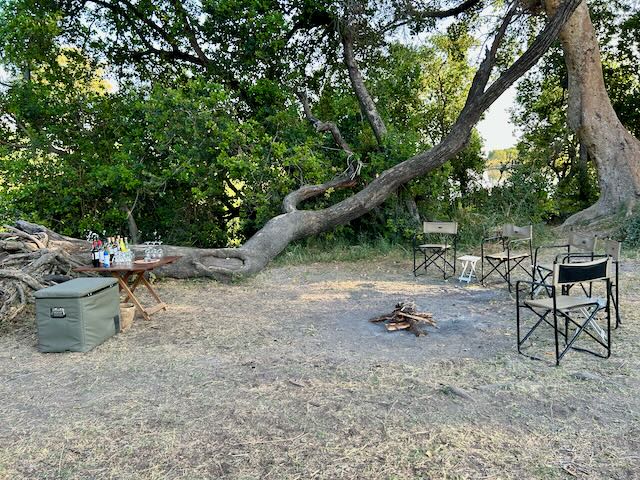
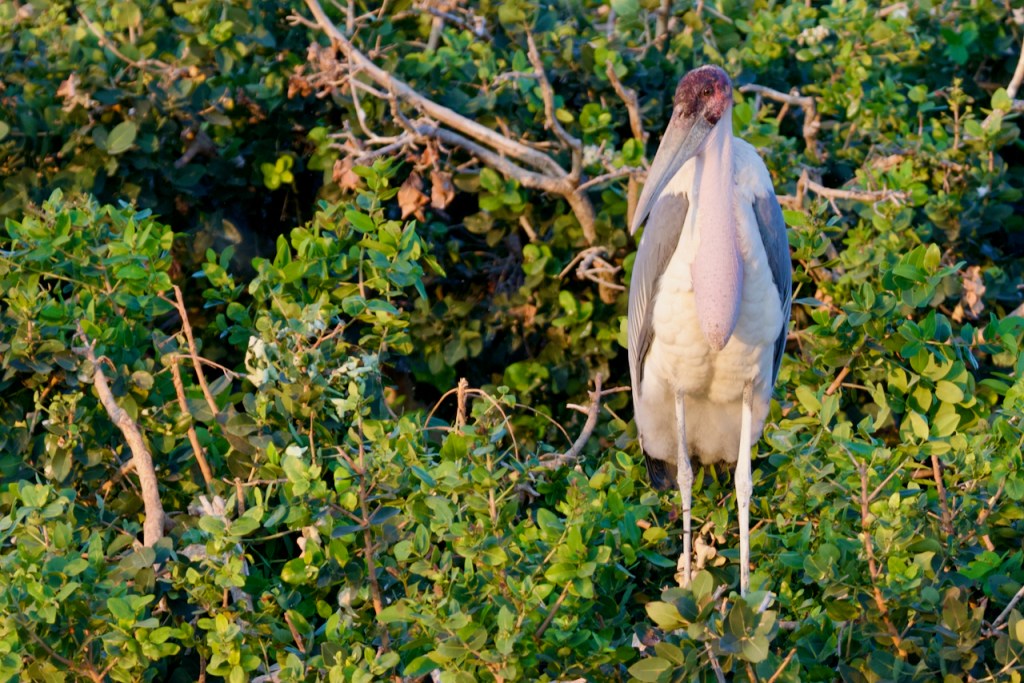
For sundowners we get back on the boat and slowly motor up the channel to a heronry which is a big nesting area for marabou storks. When they spread their wings, which have a 2.5 meter span, they are quite majestic looking but their naked face (for eating carrion) and dangling “throatcicle” (a James term for the giant wattle thing that allows them to store extra air for when they are flying at high altitude) are quite hideous making them part of the “ugly five”.

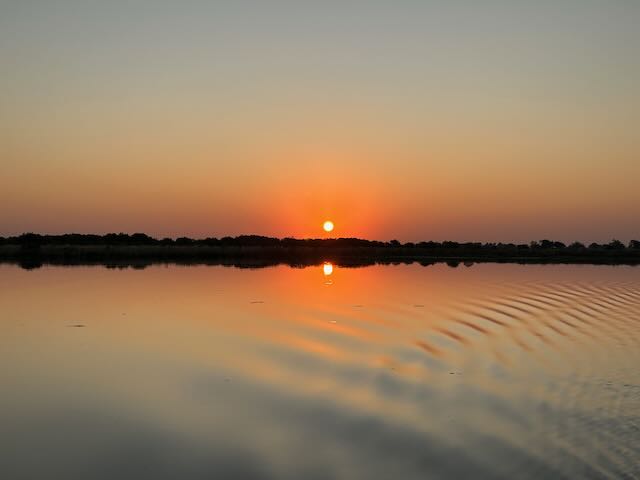
Gorgeous sunset, our last of the trip, and delicious pork spare ribs for dessert. James regales us with more stories about close encounters with lions outside his tent when sleeping in the bush and feeding a jackal muesli once which was going great until it suddenly realized he was a person and bit is finger, resulting in an emergency trip to Maun for a full treatment of rabies vaccines. It has been a great trip, but tomorrow we will start our egress from the continent and return to civilization.

 Sail the Leviathan
Leave a comment